GLP-1s are not only reshaping the treatment of obesity and diabetes; they have…
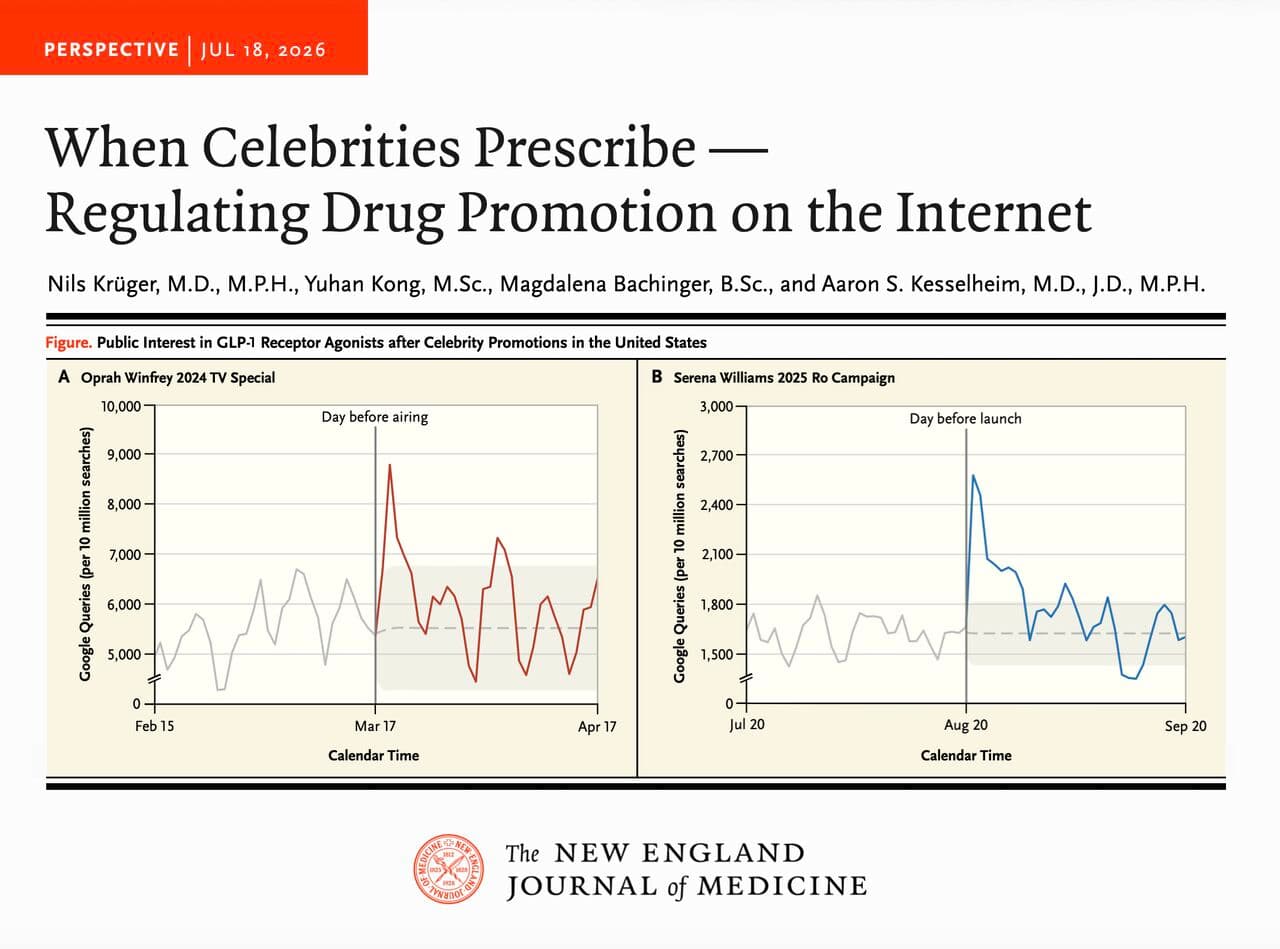
GLP-1s are not only reshaping the treatment of obesity and diabetes; they have also become the defining example of a new era of prescription-drug promotion.
In our new article out in the NEJM Group, we examine how celebrities such as Oprah Winfrey and Serena Williams have helped redefine the way patients encounter prescription medicines, and why current regulatory frameworks by the FDA have struggled to keep pace.
We found that celebrity campaigns promoting GLP-1 medicines were followed by sharp increases in public interest, even against an already intense backdrop of attention to these drugs. Google searches for GLP-1 medicines rose by up to 60% following the campaign launches, and telehealth platforms such as Ro subsequently reported increased demand for weight-loss appointments.
Link to the article: https://lnkd.in/gPzwXRmN
This adds to a recent JAMA study illustrating how dramatically access to GLP-1 medicines has already changed. Investigators requested GLP-1 prescriptions from 49 online sellers; 45 issued a prescription, but only 16 required a video consultation or a phone call with a clinician. Two prescriptions were issued within five minutes, and three quarters of websites automatically charged and shipped the medication after approval.
While greater access to effective therapies is welcome, these medicines are not lifestyle products. Treatment requires appropriate patient selection, discussion of risks, lifestyle counseling, and monitoring for adverse effects such as muscle loss and other complications.
We propose practical ways to modernize oversight so that digital drug promotion meets the same standards of fair communication of benefits and risks that we expect from traditional advertising.
Many thanks to my outstanding co-authors Yuhan Kong, Magdalena Bachinger, and Aaron S. Kesselheim, for a fantastic collaboration.
Harvard Medical School, Harvard T.H. Chan School of Public Health, Mass General Brigham Research, TUM Klinikum Deutsches Herzzentrum, DZHK Deutsches Zentrum für Herz-Kreislauf-Forschung e. V., Center for Digital Technology and Management (CDTM), Munich Center of Pharmacoepidemiology
Originally posted on LinkedIn by Nils Krüger · View the original post